Sunday, 14 May 2023

A Walk in the Garden

 Having undergone knee surgery in recent weeks, my ability to get out into the countryside, to look for emerging Spring butterflies, has been put on pause. 

My walking rehabilitation has been restricted to patrolling my garden for insects.


Orange-tip (Anthocharis cardamines) (male)


Speckled Wood (Pararge aegeria) (female)


Large Red Damselfly (Pyrrhosoma nymphula) (male)


Red Mason Bee (Osmia bicornis) (male)


Yellow Dungfly (Scathophaga stercoraria)


Hoverfly sp. (Helophilus pendulus)


Dock Bug (Coreus marginatus) (mating)


Hairy Shieldbug (Dolycoris baccarum)


Weevil sp. (Liophloeus tessulatus)


Crab Spider sp. (Xysticus cristatus) (female)


Monday, 1 May 2023

Some Moths during April

 The 2023 moth season seemed to me to be slow in getting started but April is the month when the variety of moth species attracted to light starts to increase.

The following images are from catches over the last few weeks.


Lunar Marbled Brown (Drymonia ruficornis)


Muslin Moth (Diaphora mendica) (male)

This species is sexually dimorphic. The female is white with black spots and is more likely to be found flying during the day in woodland glades.


Brimstone Moth (Opisthograptis luteolata)


Streamer (Anticlea derivata)


Clouded Drab (Orthosia incerta)


Early Grey (Xylocampa areola)


Frosted Green (Polyploca ridens)


Angle Shades (Phlogophora meticulosa)


Hebrew Character (Orthosia gothica)


Common Quaker (Orthosia cerasi)


Brindled Pug (Eupithecia abbreviata)


Eriocraniidae

This group of micro-moths are difficult to identify to species level. The density of their wing markings can be very variable and there is much overlap between species.

I think that this one is either Eriocrania unimaculella or E. sangii


Friday, 7 April 2023

Waking Hibernators

Almost as if a switch had been turned off, we said goodbye to a very wet and windy March and the forecast for the beginning of April looked full of promise for some sunny Spring weather.

I only managed to set the moth-trap up once during March with a meagre return of a couple of Hebrew Characters and a Common Quaker. 

Having seen my first butterfly of the year in mid-February, I had to wait until the last week in March for my second. A beautiful sunny day brought out several Brimstones and suddenly the woods were full of birdsong.

The following images are of some of our waking hibernators seen in the last couple of weeks.


Brimstone (Gonepteryx rhamni)

(male)


(female)


Comma (Polygonia c-album)


Peacock (Aglais io)

This one was sharing a sunny corner with Eristalis pertinax, a species of hoverfly.


Grey Shoulder-knot (Lithophane ornitopus lactipennis)

This moth hibernates as an adult and is often on the wing in early Spring. I found this one roosting on the trunk of a larch.


Green Lacewing (Chrysoperla carnea)

There are several species of lacewing in Britain and they are tricky to positively identify to species level. However, only one species hibernates and it turns from green to a straw colour to overwinter.
I disturbed this one from the undergrowth during March and I am fairly sure that it is Chrysoperla carnea.


Southern Wood Ant (Formica rufa)

Only the queen and a few worker ants hibernate underground and all other workers die off at the end of the season. During this last week I have seen much activity as thousands of ants rebuild their nests.


Wednesday, 22 March 2023

Spectacular Toads

Although I am always on the lookout for early season butterflies and moths, the occasion that I look forward to most of all in early spring, is the spectacle of toads returning to their breeding pools during March. 

They are one of my favourite creatures and I enjoy watching their antics as males battle with each other for females. Whilst these tussles can be entertaining to the human observer, they can be violent and occasionally fatal.

The males are highly charged during the breeding season and you can often see a writhing ball of male toads fighting for one female. During these tussles, females can sometimes be accidentally drowned.


Common Toad (Bufo bufo)


A male interloper is attempting to supplant another male from his prime position but eventually gives up.


Established pairs can eventually find a quiet place to get away from the melee.


A lone male basking in the sunshine.


Pairs often gather together in prime spawning areas


Friday, 10 March 2023

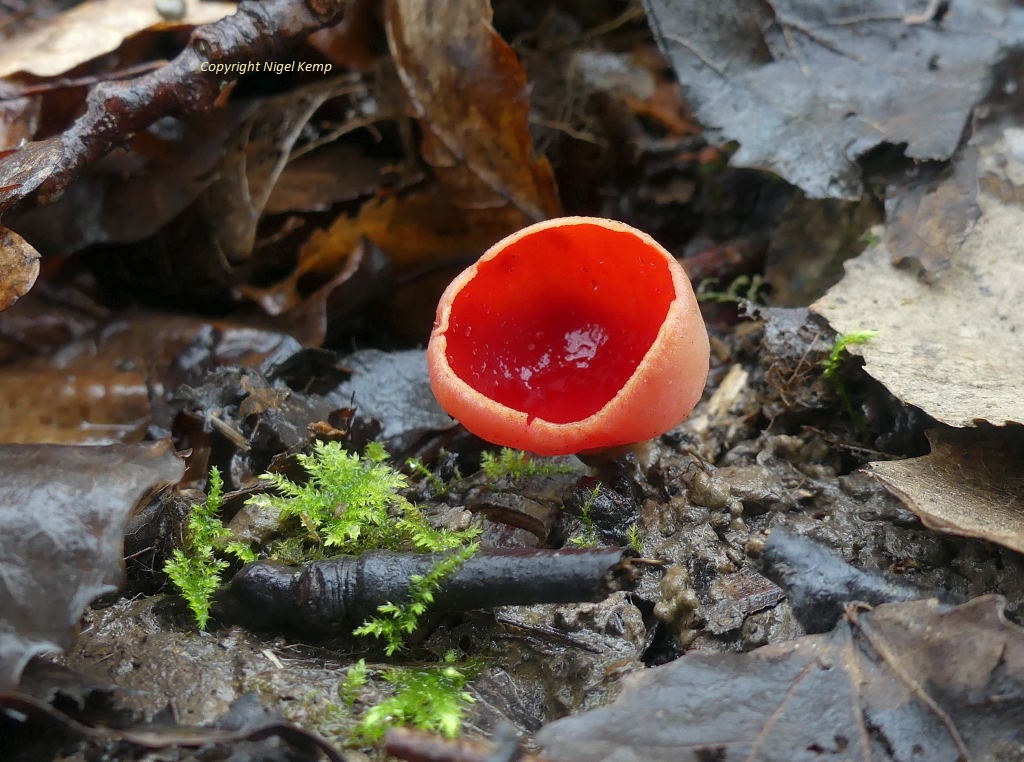
Scarlet Elf-cup

 When you come across this attractive cup fungus during the colder months of the year, you might think that it will be easy to identify but you would be wrong. It could be one of two virtually indistinguishable species.

Whichever species you have found, scattered light inside the cup can look like there is a tiny furnace deep within.

Sarcoscypha austriaca (Scarlet Elf-cup) and Sarcoscypha coccinea (Ruby Elf-cup) can only be separated with any certainty by microscopic examination of spores and hairs.

As a man who does not possess a microscope, I suspect that I will continue to lump both species under one heading. 


Scarlet Elf-cup.


Friday, 17 February 2023

My 2023 Butterfly Season Gets Underway

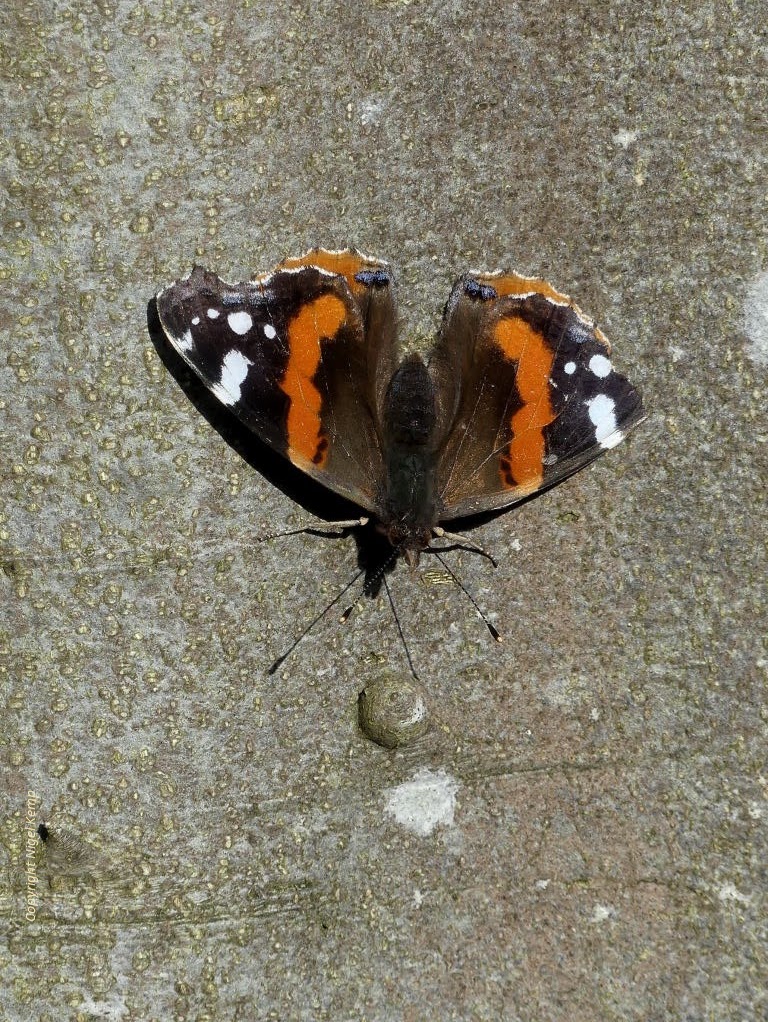
 A few sunny days in February always brings an expectation of butterfly sightings for the enthusiast and I saw my first butterfly of the year earlier this week. More often than not in the last decade or so, that butterfly has been a Red Admiral (Vanessa atalanta).

Unlike the four common hibernators in Britain (Brimstone, Comma, Peacock and Small Tortoiseshell) the Red Admiral does not enter true hibernation. It has evolved as a continually breeding species (together with the Clouded Yellow and Painted Lady). It is predominantly a migrant to the UK but in recent decades it has been able to over-winter in southern England in varying numbers as a result of our warming climate.

The Red Admiral can pass the winter in any of its life cycle stages but as an adult butterfly, as long as it has access to nectar and a safe roost, it can survive very well. Places like Ashdown Forest in East Sussex provide plenty of insulating layers of dead bracken for roosting and there is always plenty of gorse in flower throughout the year to provide nectar.


Red Admiral (Vanessa atalanta) (female)


Hairy Curtain Crust (Stereum hirsutum)

This species of fungus is very variable in colour and form. Their fruiting bodies either lay flat on the wood substrate or they form a bracket. I came across this small group in a rather upright form.