Showing posts with label Purse-web Spider. Show all posts

Sunday, 29 September 2019

September Highlights

Between the blustery downpours of late, I have been making use of any quiet weather interludes. Late summer has now turned into autumn and at this time of year I am a regular visitor to my local National Trust gardens to check out any sheltered floral corners for nectaring insects.


Small Copper (Lycaena phlaeas) (female) (ab. extensa) 


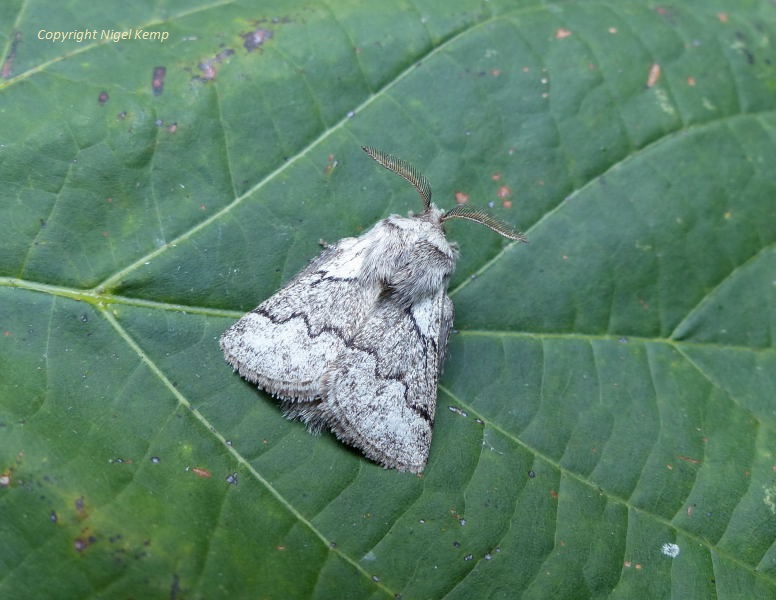
The moth-trap can attract some interesting species during the autumn and a Pale Eggar (Trichiura crataegi) made a first ever appearance to my garden last week


Pale Eggar (Trichiura crataegi) (male)


Autumnal Rustic (Eugnorisma glareosa)


A couple of weeks ago, a friend told me of an interesting caterpillar feeding on purple toadflax in her Eastbourne garden. I photographed it the next day resting on a lavender head and we found another three larvae on other toadflax plants. Nationally, the Toadflax Brocade (Calophasia lunula) is a Red Data Book species but Eastbourne seems to be one of its strongholds.

Toadflax Brocade (Calophasia lunula) (larva)


Whilst the breeding season for most species is coming to an end, autumn marks the start of the mating season for the Purse-web Spider (Atypus affinis) when males can be found above ground searching for female burrows. This species is a distant relative of the Tarantulas, born out by those huge fangs and tail spinnerets. Thankfully, it is only the size of a thumb-nail. 

A few days ago, I was walking with friends along the cliff tops near Seaford in 40mph gusts and heavy showers when I saw this male being blown about across the short grass.


Purse-web Spider (Atypus affinis) (male)


Tuesday, 25 October 2016

Season's End ?......Not Quite

While the sun is shining and temperatures are still reaching double figures, the season isn't quite over yet. Whilst some invertebrates are coming to their end, others will continue until their food source runs out or the temperatures drop. For one small spider however, the breeding season is underway.
 
 
There are still good numbers of Common Darters and Migrant Hawkers flying on Pevensey Levels at the moment, one or two of which are looking quite fresh for this time of year.
 
 
Migrant Hawker (Aeshna mixta) (male)


For this year's breeding female Fen Raft Spiders, the season is coming to a close. Juvenile spiders can still be seen regularly on warm sunny days but any adult females will be seeing out their remaining days in the watery autumn sunshine having probably raised two broods during the summer. The photograph (below) shows a typical late season female with one leg missing and shrinkage folds on her abdomen.....perhaps the fly sitting between her feet senses that she has no bite left.
 
 
Fen Raft Spider (Dolomedes plantarius) (female)   


For the Purse-web Spider (Atypus affinis), the breeding season is now underway. They spend most of their lives in their underground web-tubes but autumn is the best time to see males above ground as they leave their web-tubes to search for females. A close look at the huge fangs and tail spinners gives a hint that this species is a distant relative of the tarantulas; just as well that it is no bigger that a thumb-nail!
 
 
Purse-web Spider (Atypus affinis) (male)
 
(these photographs were taken on 25th October 2014 on the East Sussex Downs)