Showing posts with label White-legged Damselfly. Show all posts

Sunday, 4 September 2022

Delightful Damselflies

 I delight in watching damselflies as they fly through the long grass of a meadow or amongst pondside reeds. They can be quite tricky to photograph, especially if, like me, you are reliant on automatic focusing. They are worthy of close attention and here are a few images of damselflies and a dragonfly taken during July and August in a wealden wood.


White-legged Damselfly (Platycnemis pennipes) (male)


Common Blue Damselfly (Enallagma cyathigerum) (female, drab form)


Emerald Damselfly (Lestes sponsa) (male)


Willow Emerald Damselfly (Chalcolestes viridis)

This female fortuitously landed on this willow stem as I was photographing the ovipositing scars left by another female.


The female of this tandem pair is ovipositing by injecting her eggs under the bark of the willow stem.


A tandem pair at rest.


Migrant Hawker (Aeshna mixta) (male)


Sunday, 7 June 2020

Finding Dragonflies and Damselflies in a Wealden Wood

Now that the weather has turned a little cooler and more changeable, I like to head for one of my favourite Wealden woods to see what dragonflies and damselflies I can find at rest amongst the bracken.

 When you watch them during hot and sunny weather, they are usually very active but when the sun goes in you can sometimes watch them settle in the undergrowth.


Four-spotted Chaser (Libellula quadrimaculata) 

(female, form praenubila)


Emperor Dragonfly (Anax imperator) (male)


White-legged Damselfly (Platycnemis pennipes) (female)


Azure Damselfly (Coenagrion puella) (male)


Moth-trap catches have been smaller since the night-time temperature has been a little cooler this week but I usually find something worthy of close attention.


Foxglove Pug (Eupithecia pulchellata)


Broad-barred White (Hecatera bicolorata)


Friday, 23 August 2019

Late Summer in a Wealden Wood

As we enter the last week of August, all of our resident butterfly species are either on the wing or are over with for another season. In good years, some species will produce third broods in September and October and the current influx of Long-tailed Blues (Lampides boeticus) from the continent is sure to provide some late-season excitement.  

For me, the sight of Brimstones (Gonepteryx rhamni) busy nectaring at thistle heads in readiness for hibernation signals that Autumn is not far away.


Brimstone (Gonepteryx rhamni) (male)


Ruddy Darter (Sympetrum sanguineum) (males)


Ruddy Darter (S. sanguineum) (immature male)


Ruddy Darter (S. sanguineum) (female)


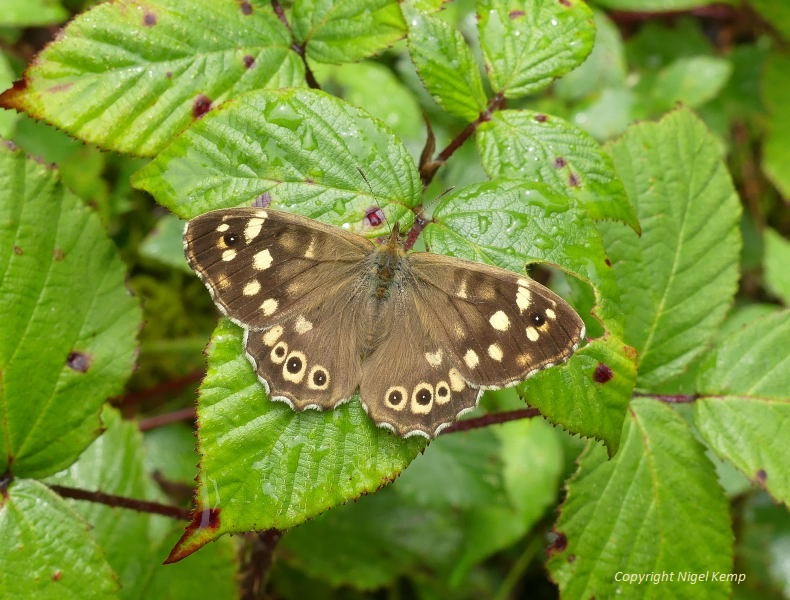
Speckled Wood (Pararge aegeria) (female)


Large White (Pieris brassicae) (female)


Common Blue Damselfly (Enallagma cyathigerum) (male)


White-legged Damselfly (Platycnemis pennipes) (female)


Thursday, 26 July 2018

Damselfly Encounters

With little shelter from the hot sunshine beating down, I have not ventured onto Pevensey Levels in the last week or so but have sought the shade and coolness of some favourite riverbanks and Wealden ponds in search of damselflies. 
 
The White-legged Damselfly (Platycnemis pennipes) is a localised species in Sussex but often abundant in favoured habitats. Whilst walking along an East Sussex riverbank this week, I disturbed dozens of this attractive and distinctive species.
 
 
White-legged Damselfly (Platycnemis pennipes) (male)


White-legged Damselfly (P.pennipes) (female)


White-legged Damselfly (P.pennipes) (pair in tandem)


Small Red-eyed Damselfly (Erythromma viridulum) (male)
 
This recent colonist from Europe is now a widespread species in south-east England.


Small Red-eyed Damselfly (E.viridulum) (mating)


During Autumn 2017, I found dozens of egg sacs of the Wasp Spider (Argiope bruennichi) in a Wealden woodland clearing. I returned to the site last week to look for adult females on their webs. These striking spiders make a distinctive web with zig-zag 'sutures' within the structure.
 
 
Wasp Spider (Argiope bruennichi) (female)


A couple of favourites from the moth-trap this week.
 
 
Iron Prominent (Notodonta dromedarius)
 
This open winged view shows the tufts on the trailing edge of the forewings that give the Prominent family their name.


Scalloped Oak (Crocallis elinguaria)