Sunday, 10 January 2016

Pevensey Levels

Wednesday 6th January provided a welcome sunny respite from the persistent rain of the previous few days. I met up with Bob Eade for a stroll across the levels to see what might be about and we were rewarded with good views of 3 Marsh Harriers, 1 Hen Harrier and 2 Kingfishers and not such a good view of a Short-eared Owl.
 
 
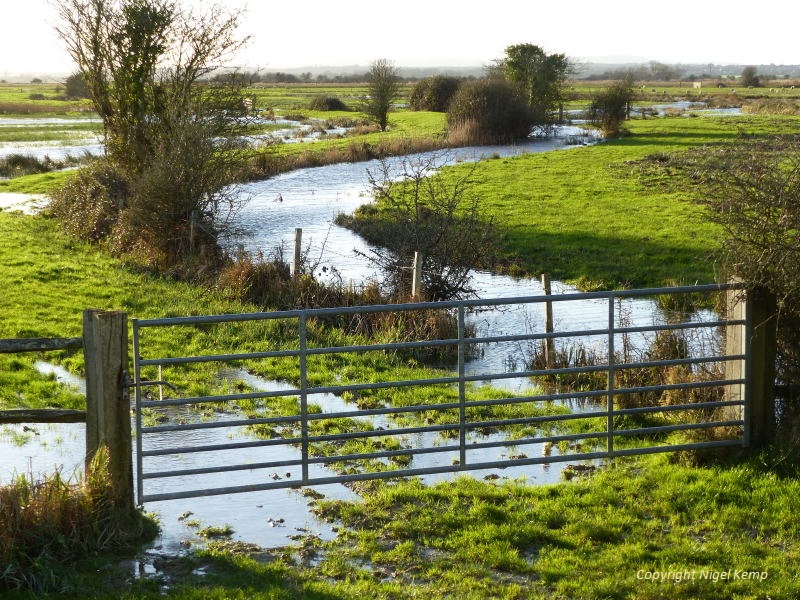
A view across the levels (below) looking towards the ever present dome which used to house the Isaac Newton telescope, before it was moved to the Canary Islands in the late 1970's.


The following day, Carol and I returned to the levels to enjoy the beautiful late afternoon sunshine. Heavy overnight rain meant that waders might have been a better choice than wellies but we were treated to the sight of a Merlin flying low across the fields in front of us.


Sunday, 3 January 2016

Rarity

It is always a thrill when I happen upon rare species or rarely seen behaviour in the wild. Whilst I'm not particularly obsessive about chasing rarity for it's own sake, I am always on the look out for anything unusual.

For me, rarity can mean a nationally rare resident breeding species, rare and vagrant migrant species, or regionally rare species that may be common in one county and not found in the next.

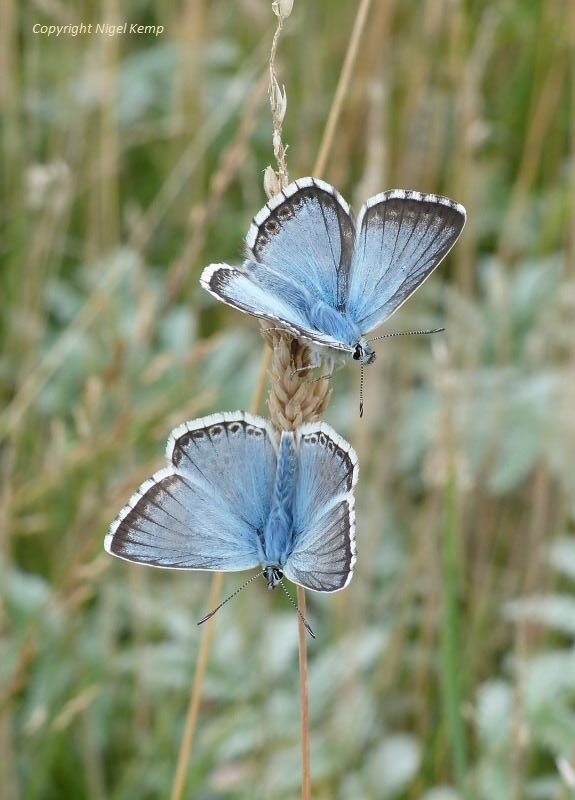
Globally, the Long-tailed Blue (Lampides boeticus) is a widespread species but it is a rare migrant to UK shores and in two of the last three years it has managed to produce late season British broods. When, in 2013 it became clear that Long-tailed Blues were arriving in southern England along a broad front, I was keen to seek it out in East Sussex.

 
Long-tailed Blue (Lampides boeticus) (female)


Long-tailed Blue (L. boeticus) (male)


Long-tailed Blue (L. boeticus) (male)


This individual (below) was the only example I saw in 2015, found by Mark as we searched together at an East Sussex site.


The Four-spotted Footman (Lithosia quadra) is mainly a migrant moth to Britain but has established a breeding population in East Sussex in recent years. In June 2014, my wife and I came across a quadra larva basking on a garlic mustard leaf whilst I was looking for Orange-tip larvae. Whilst I could see what family it was from, I didn't make a positive identification until I got home to check the books. It was the first confirmed sighting of a quadra larva in Sussex since 1949 and then 1874 before that.

(Reference; "A Complete History of the Butterflies and Moths of Sussex" vol.4, by Colin R. Pratt).
 
 
Four-spotted Footman (Lithosia quadra) (larva basking on garlic mustard leaf in East Sussex)


Guide books will show that the main breeding populations for the Scarce Emerald Damselfly (Lestes dryas) seem to be centred around the Thames estuary and Norfolk. The occurrence of this species in East Sussex can at best be described as sporadic, with I believe no known or confirmed breeding sites within the county. In July 2014, I came across a male dryas on Ashdown Forest.


Scarce Emerald Damselfly (Lestes dryas) (male)


For all things to do with orchids, I go straight to the excellent "Orchids of Britain and Ireland" by Anne & Simon Harrap. The distribution map for the Green-flowered Helleborine (Epipactis phyllanthes) shows that it is found locally mainly in south-central England. In East Sussex it appears to be a rare plant although it may be under-recorded. In 2014 I was invited by a friend to come and see a helleborine species that appears annually beside her farm driveway. After consulting the Harrap, I was confident that we were looking at phyllanthes. In 2015, I decided to search a wider area for more plants and was chuffed to find another small group growing nearby.


Green-flowered Helleborine (Epipactis phyllanthes) from the original group.


Green-flowered Helleborine (E. phyllanthes) from the second group.

Sunday, 27 December 2015

Halcyon Summer Days

I think I read somewhere that globally, chalk landscapes are rare, but growing up in a Brighton suburb on the edge of town, the South Downs around Brighton and Lewes have always been a familiar playground to me.

As an antidote to these endless grey damp days of winter, I think back (and look forward) to those halcyon days of summer, wandering the East Sussex downs under warm blue skies.


Adonis Blue (Lysandra bellargus) (male)


Chalkhill Blue (Lysandra coridon) (males)


Common Blue (Polyommatus icarus) (males)


Clouded Yellow (Colias croceus) (female)


Dark Green Fritillary (Argynnis aglaja) (male)


Marbled White (Melanargia galathea) (female)


Bee Orchid (Ophrys apifera)........I see a laughing jester rather than a bee!


Lizard Orchid (Himantoglossum hircinum)

Saturday, 19 December 2015

A Fascination for Caterpillars

Although caterpillars can be found at anytime of the year, a good time to go searching for them is during August, September and October when I specifically look for maturing larvae of the Hawkmoth (Sphingidae) and Prominent (Notodontidae) families. A walk along woodland rides patiently inspecting sallow, willow and birch can be very rewarding.


Poplar Hawkmoth (Laothoe populi) (mature larva on sallow)


Pebble Prominent (Notodonta ziczac) (mature larva on sallow)


Coxcomb Prominent (Ptilodon capucina) (mature larva on sallow)


Coxcomb Prominent (Ptilodon capucina) (mid-instar larva on sallow)


Lesser Swallow Prominent (Pheosia gnoma) (mid-instar larva on birch)


Buff-tip (Phalera bucephala) (larva on oak)

Saturday, 12 December 2015

A Confusion of Frogs and Toads

Once Christmas is done and dusted, the first sign of spring activity that I start looking for in the new year is the return of frogs, toads and newts to their breeding pools. Anytime from early March I concentrate my efforts on checking wealden lake edges and downland dewponds for signs of their arrival.


Common Toad (Bufo bufo) (mating clasp)


Confusion reigns and male toads will fight each other off in pursuit of a female, resulting in a mass of writhing bodies. The males of both frogs and toads are highly charged during the breeding season which can occasionally lead to some bizarre behaviour amongst the strings of toad spawn.


The following photographs show a male Common Frog (Rana temporaria) in a mating clasp with a female Common Toad (Bufo bufo). These species are not closely enough related to produce hybrid offspring and the spawn being laid by the toad was destined to remain unfertilised.


Monday, 7 December 2015

Lakes, Moats and Millponds

My wife and I have been National Trust members for some years now. The Trust owns large tracts of countryside and coastal strip which can be a haven for wildlife and many of their properties also have lakes, moats and millponds which provide a home for many species. Whilst I enjoy looking around historic buildings, I am invariably drawn to the gardens to check out the waterscapes.

Batemans at Burwash is our nearest Trust property and I usually call in on my way back from anywhere to sit by Kipling's boating pond and watch for insects.


Four-spotted Chaser (Libellula quadrimaculata) (male)


Emperor Dragonfly (Anax imperator) (male)


Red-eyed Damselfly (Erythromma najas) (pair in tandem)


Elephant Hawkmoth (Deilephila elpenor) (green form larva on water plantain sp.)


Tuesday, 1 December 2015

Purple Hairstreak

The Purple Hairstreak (Quercusia quercus) is a little gem of a butterfly and well worth seeking out in mixed woodland containing plenty of oak, its only foodplant. Although a fairly common species in Sussex, it is largely a canopy dweller which makes it tricky to see at close quarters but with plenty of patient hours in the field and a knowledge of its life cycle and behaviour, you can see this beauty up close.


Purple Hairstreak (Quercusia quercus) (female)


Purple Hairstreak (Quercusia quercus) (mating)