Monday, 12 November 2018

Late Autumn Sunshine

All the time the sun continues to shine and the air temperature hovers around 10 degrees, there is still a chance of seeing some late season insects but a recent change in the weather to more blustery conditions has largely put paid to any lingering butterfly and dragonfly populations on Pevensey Levels.
 
My last sightings of the Wall (Lasiommata megera) were of two males flying together on 2nd November. This is the latest date that I have ever seen them on the wing.
 
Wall (Lasiommata megera) (male)


Common Darters (Sympetrum striolatum) (basking in the sunshine)


Red Admiral (Vanessa atalanta) (nectaring on ivy)


My garden moth-trap is still attracting some seasonal species.
 
 
Feathered Thorn (Colotois pennaria)


Autumnal Moth (Epirrita autumnata)


Rye Harbour, East Sussex.


Sunday, 28 October 2018

Autumn Fare

The mild October weather has allowed butterfly activity to continue well into Autumn but a run of cold weather will bring an end to proceedings.
 
During this last week on Pevensey Levels the Wall (Lasiommata megera) has continued to appear in good numbers with 2 or 3 males at a time battling with each other. Mating was also observed. The star of the show however was a fresh fecund female Painted Lady (Vanessa cardui) feeding on ivy and basking in the sunshine at regular intervals.
 
 
Painted Lady (Vanessa cardui) (female)


Wall (Lasiommata megera) (mating pair)


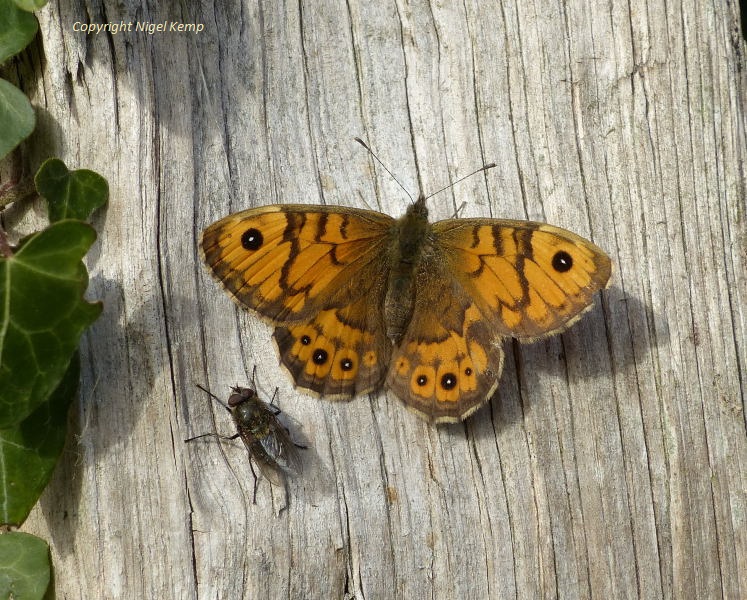
Wall (L.megera) (female sharing a sunny spot with a fly)


The moth-trap in my Wealden garden has produced the usual Autumn species during September and October. This is the time of year when some interesting migrants can appear at the light, ranging from extreme rarities from Europe and North Africa to more regular migrant species that can produce a summer brood within the United Kingdom and even establish resident colonies in the south.
 
 
Four-spotted Footman (Lithosia quadra) (male)


Four-spotted Footman (L.quadra) (female)


Blue Underwing (Catocala fraxini)
 
I have taken better photographs of this impressive species but even a damaged specimen demands to be photographed!


L-album Wainscot (Mythimna l-album)


Palpita vitrealis


Vestal (Rhodometra sacraria)


In good years, some species of moth can produce a partial second brood in the Autumn. The following two species are usually single brooded, flying from June to August but they both appeared at my light on 16th October.
 
 
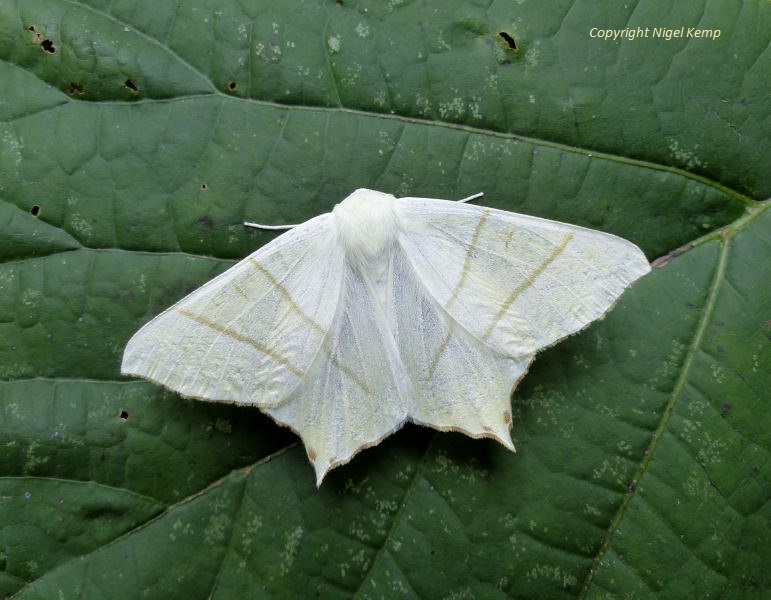
Swallow-tailed Moth (Ourapteryx sambucaria)


Beautiful Hook-tip (Laspeyria flexula)


The following images are of common Autumn resident species.
 
 
Sallow (Xanthia icteritia)


Barred Sallow (Xanthia aurago)


Merveille du Jour (Dichonia aprilina)


Brindled Green (Dryobotodes eremita)


Green-brindled Crescent (Allophyes oxyacanthae)


Yellow-line Quaker (Agrochola macilenta)
 
(The specimen on the left is form obsoleta which lacks the dark spot in the kidney mark.)


Pine Carpet (Thera firmata)


Red-green Carpet (Chloroclysta siterata)


Satellite (Eupsilia transversa)

Sunday, 14 October 2018

Late Summer Butterflies

In general, it has been a good year for butterflies and the hot summer weather has particularly benefited the multiple brooded species. At this time of year the butterfly season is moving towards its inevitable close. I don't allow a single warm day to pass without getting out for a walk somewhere in the Weald or on Pevensey Levels, to see what is on the wing.
Holly Blue (Celastrina argiolus) (2nd brood female)


Small Copper (Lycaena phlaeas) (3rd brood male)


Large White (Pieris brassicae) (2nd brood mating pair)


Brimstone (Gonepteryx rhamni) (roosting male)


Wall (Lasiommata megera) (3rd brood male)


Migrant Hawker (Aeshna mixta) (mating pair)


Spiked Shieldbugs (Picromerus bidens) predating the larva of a Knot Grass moth (Acronicta rumicis


By contrast, my moth trapping season has been disappointing, with consistently small catches compared to previous years. Here are three of my favourites, caught in the garden during August.


Yellow-barred Brindle (Acasis viretata)


Flame Carpet (Xanthorhoe designata)


Brimstone Moth (Opisthograptis luteolata) (ab. ruficosta)

Monday, 8 October 2018

Basking Marsh Frogs

I am a regular visitor to Rye Levels during the summer months where I am always on the look-out for any insects that may have arrived from across the channel. Nothing of interest to report for this year but another foreigner has been resident on Romney Marsh since the 1930's and is a particular favourite of mine. The Marsh Frog (Rana ridibunda) is abundant on Rye Levels and they can often be seen basking on the banks of ditches or amongst the water foliage on the water surface. They are very quick to dive into the water as you approach and in order to get close, the trick is to see them before they see you. 
 
 
Marsh Frog (Rana ridibunda)
 
The first two images are of two different adults and the third image is of a sub-adult.


Tuesday, 18 September 2018

Snakes, Damselflies & Spiders.....Pevensey Levels in September

The name Grass Snake (Natrix natrix) is somewhat of a misnomer for this water loving reptile. Although it is often encountered basking in sunny spots on grassy banks, it is very much at home in water where it can be found in pond margins and in open water, hunting for frogs and other amphibians.
 
Yesterday, I watched this Grass Snake in hunting and stalking mode.
 
 
Grass Snake (Natrix natrix)


My search for more colonies of the Willow Emerald Damselfly on Pevensey Levels continues.
 
Willow Emerald Damselfly (Chalcolestes viridis) (male)


I usually see adult Fen Raft Spiders well into October but I haven't seen any in recent weeks. Perhaps the hot summer months allowed plantarius to have two or even three quick successive broods and now the females are spent. I have however been seeing plenty of juveniles and sub-adult plantarius in the water margins. The photograph below looks to be of a sub-adult male.
 
Fen Raft Spider (Dolomedes plantarius) (sub-adult)


Wednesday, 12 September 2018

Willow Emerald Damselfly on Pevensey Levels

The Willow Emerald Damselfly (Chalcolestes viridis) has been establishing itself as a breeding species in south-east England since the turn of the 21st century. Over the last few years, I have been on the lookout for it on Pevensey Levels. Rather than travel to where it is known to occur, I have been keen to find it closer to home and on Friday 7th September my patience was rewarded when I spotted a single male holding territory. Two days later, whilst watching the same male, I saw a second individual holding a neighbouring territory.
 
 
Willow Emerald Damselfly (Chalcolestes viridis) (male)


Also seen on the levels during the past week.....
 
 
Blood-vein (Timandra comae)


European Corn Borer (Ostrinia nubilalis) (female)


The ghost-like shed skin of a Grass Snake (Natrix natrix)